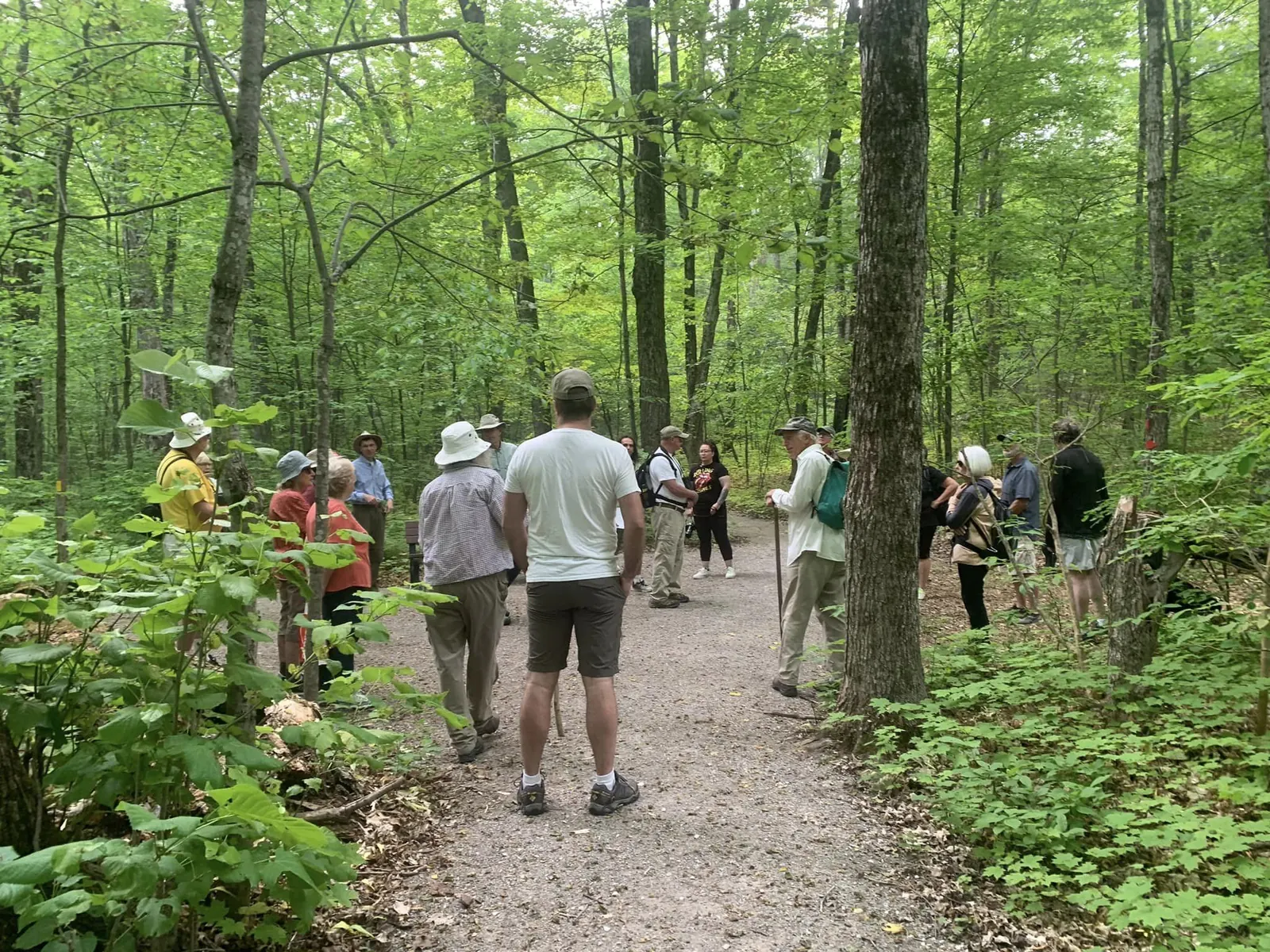
A forest growing on an ancient sea floor.
Four trails through old-growth forest, along the Niagara Escarpment and across a rare limestone alvar. Every step crosses 400 million years of Manitoulin's story.
Same rock. Three different worlds.
The stone under Wagg's Woods began as the floor of a warm sea south of the equator. Drag the slider back through time and watch this exact spot change.
Old-growth forest
Not to scale. Squeeze all 425 million years into a single 24-hour day, and the ice melts off Manitoulin just 2.4 seconds before midnight.
Four trails, four kinds of ground
Each trail crosses a different chapter of the story: forest floor, ancient seabed, a cliff edge, and a rare limestone plain on top.
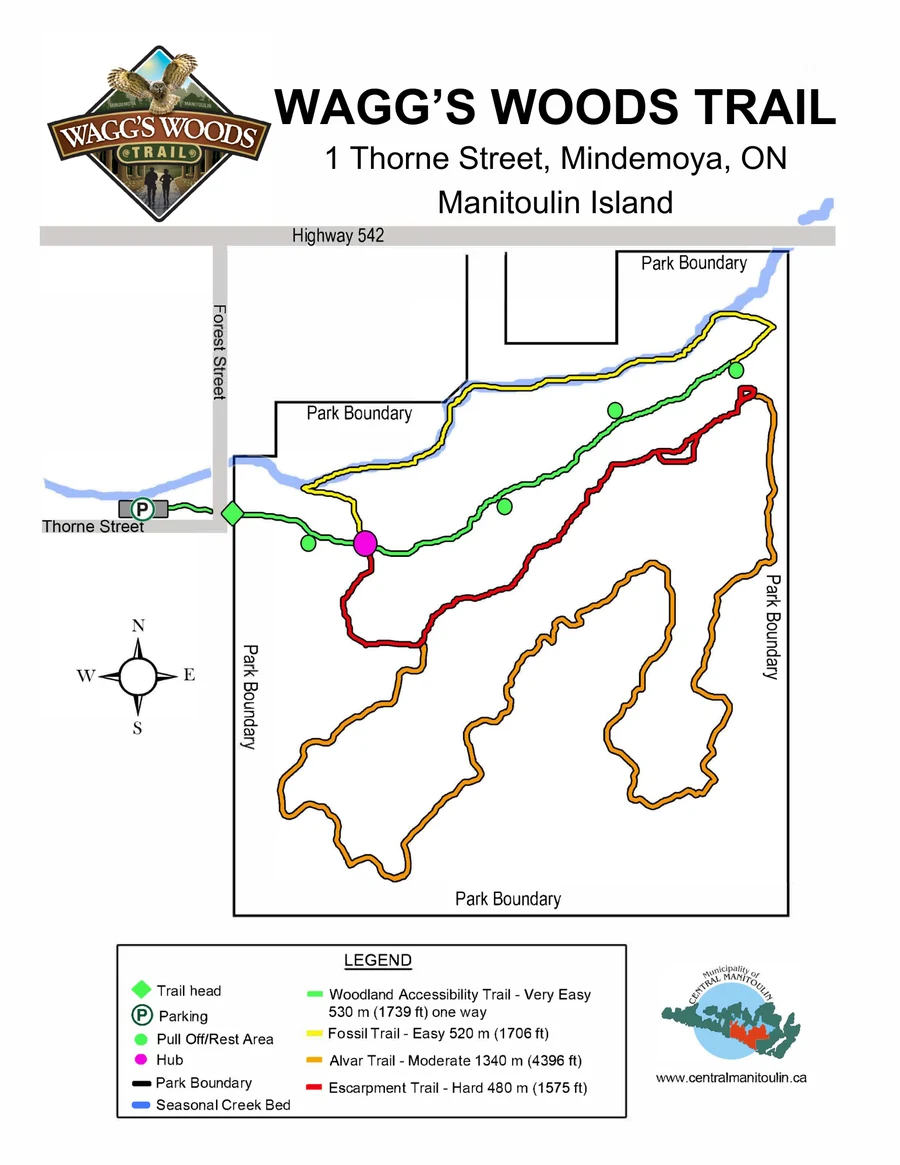
All four together: 2,870 m · about 3 km
Reef life, frozen in stone
The dry creek bed is the floor of a warm, shallow sea. Corals, sponges and shelled animals lived and died here, and their skeletons hardened into the rock you're walking on.
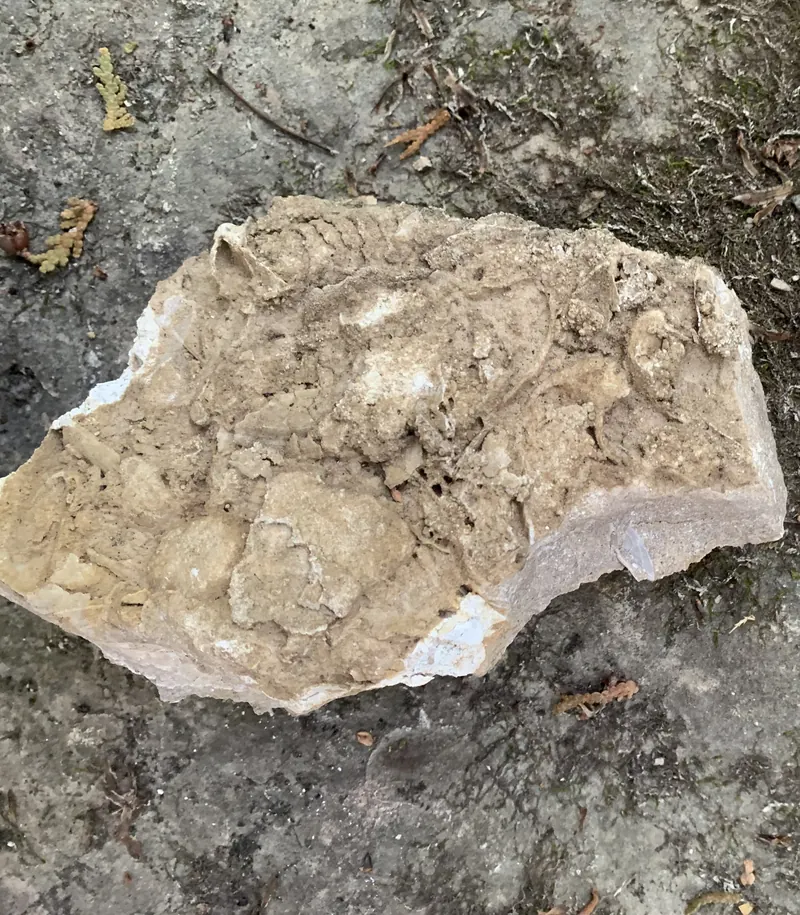
Fossil groups often found in Manitoulin's ancient seabed rock. Spot one, then tap its card to see what the animal was.
How do you build a cliff? Take rock away.
This ridge is part of the Niagara Escarpment, which curves through New York, Ontario, Michigan and Wisconsin. Over millions of years, water and frost wore soft rock away faster than the hard rock sitting on top of it.
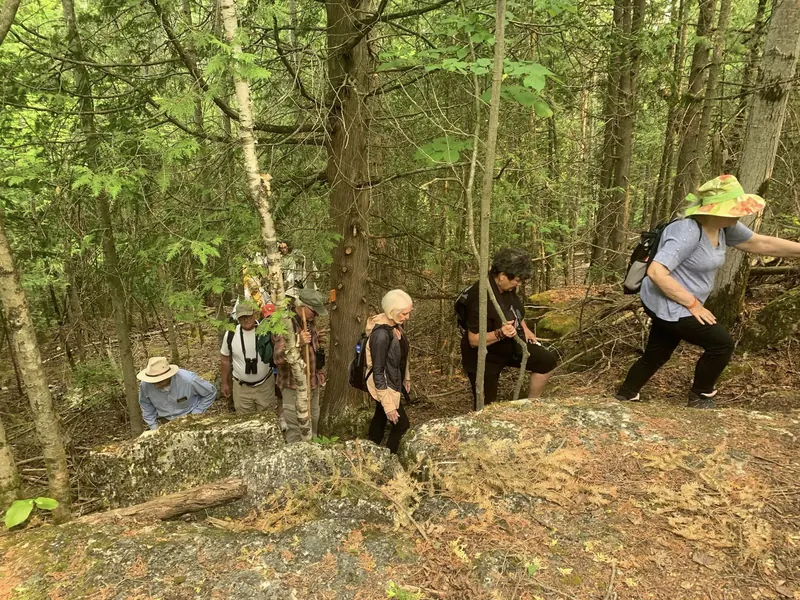
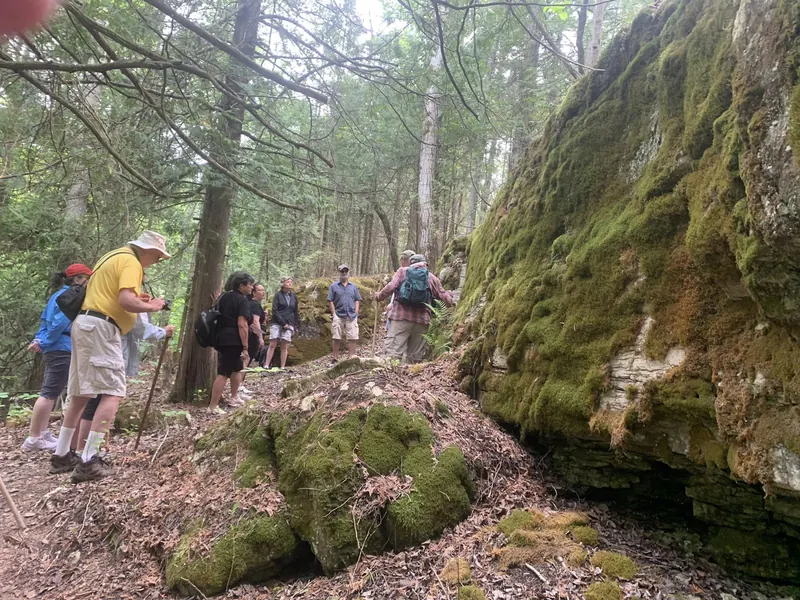
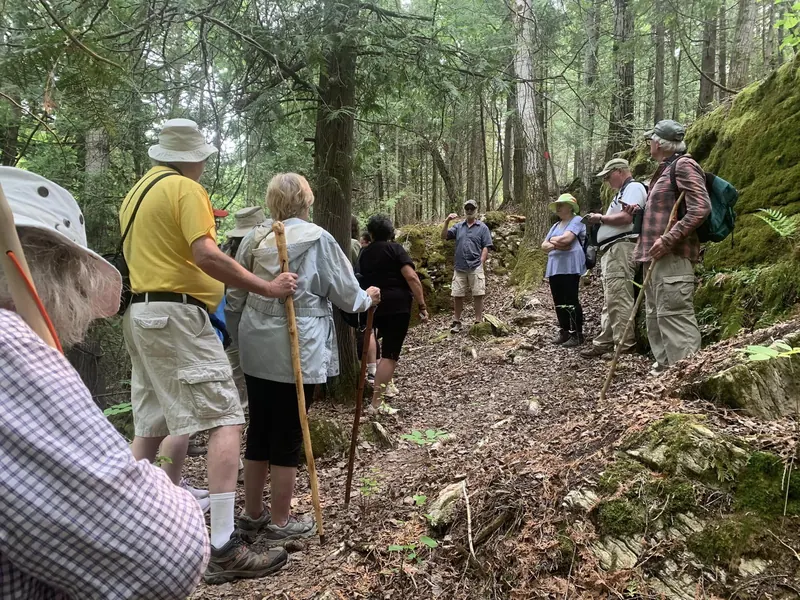
On the trail, look at the cliff base for broken blocks of caprock. That rubble is this process caught in the act.
A desert on top of the cliff
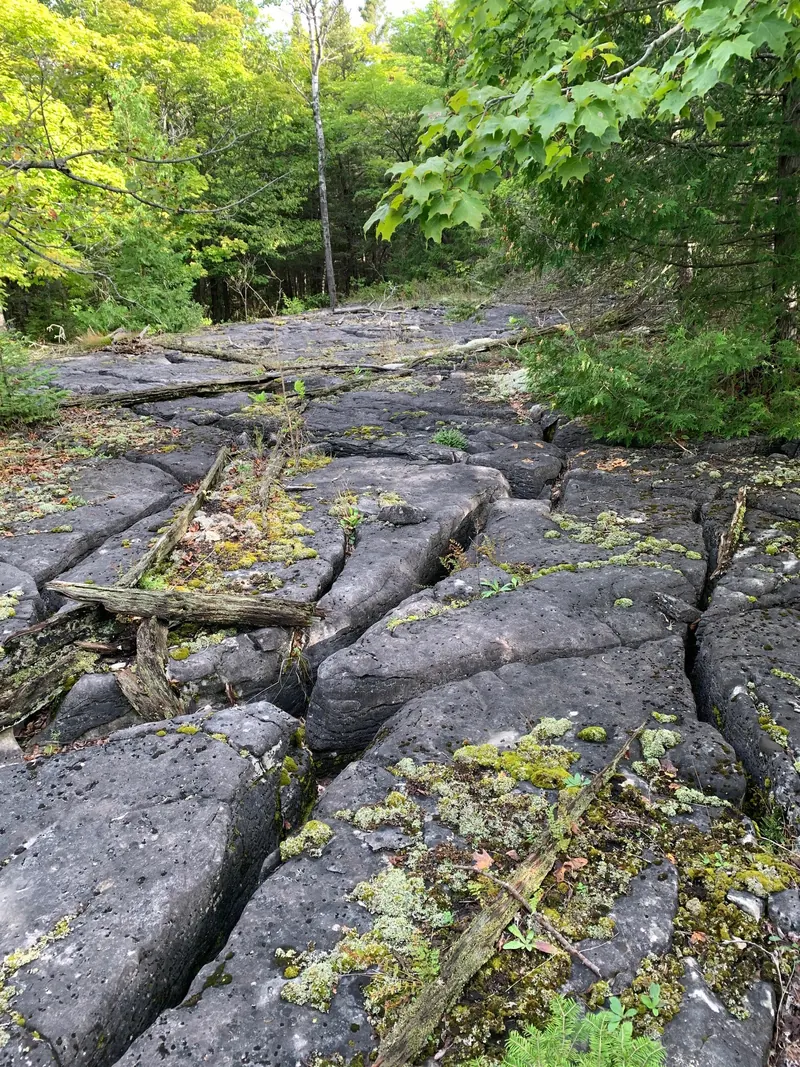
Up on the escarpment the forest thins into an alvar: a flat limestone plain with little or no soil. It floods in spring and bakes in summer, so only tough, specialized plants and animals can live here. Alvars are rare worldwide.
An old-growth forest that breathes in more than it breathes out
Big, old trees and the deep soil beneath them lock away carbon dioxide, part of why Manitoulin Island captures and stores more CO₂ than it produces.
Look up for towering yellow birch with curly, coppery bark. In spring, before the leaves come out, look down for a rush of wildflowers racing to bloom while sunlight still reaches the forest floor.
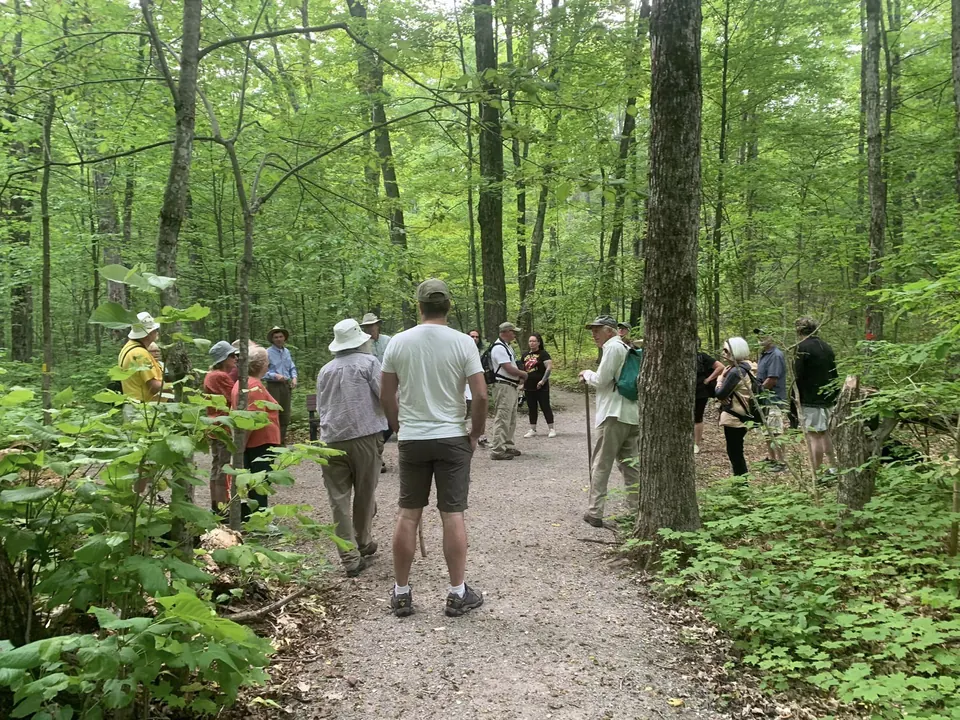
Tick what you spot. Your list is saved on this phone.
Who cooks for you?
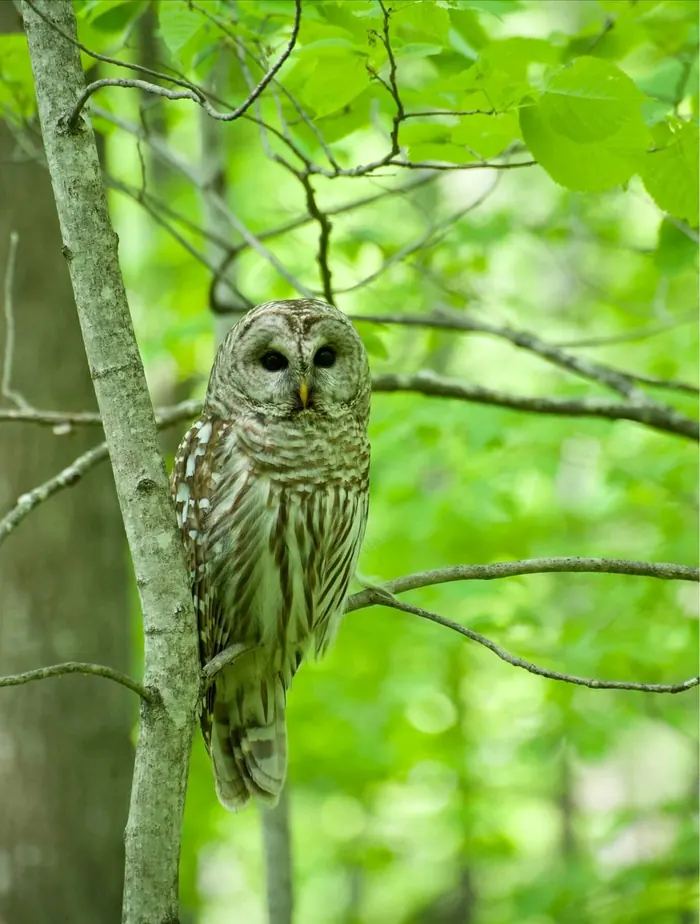
The barred owl is the voice of Wagg's Woods. At dusk, listen for its call, which birders remember as "Who cooks for you? Who cooks for you all?" Unlike most owls, it has dark brown eyes.
A synthesized rhythm, so you know what to listen for.
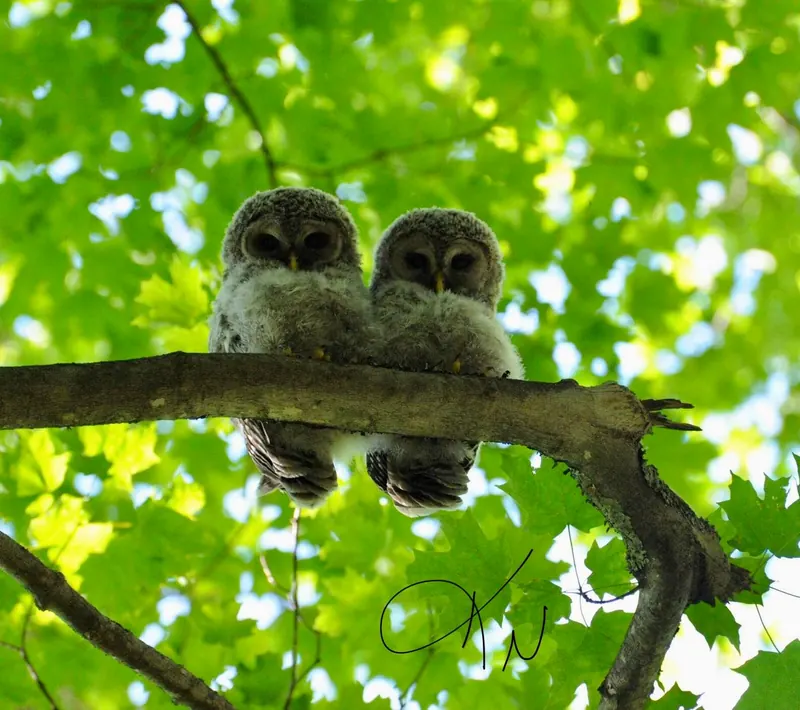
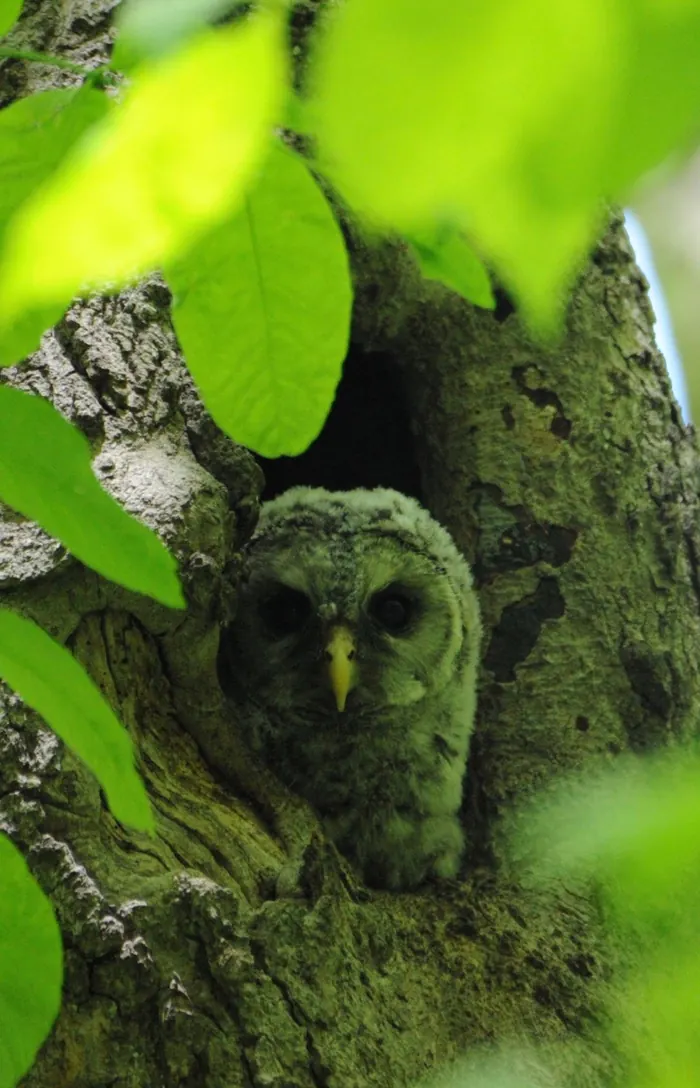
A home for owls
In 2023 the Manitoulin Nature Club donated an owl nesting box, and Manitoulin Tree Service put it up. Old trees with hollows are rare, so a box gives a pair a safe place to raise young.Who else lives here?
Look for a porcupine resting high in the branches, and listen for the wood thrush, whose flute-like song echoes through the forest on summer mornings.The family behind the woods
The Waggs helped build Carnarvon Township, ran Mindemoya's store and creamery, and served the community for generations. The Municipality obtained this land from the family to create the trail.
To learn more, visit the Mindemoya Pioneer Museum, 2207 Hwy 551, or contact Municipal Curator Mnawaate Gordon-Corbiere at curator@centralmanitoulin.ca · 705-377-4383.
Before you head in
Getting here
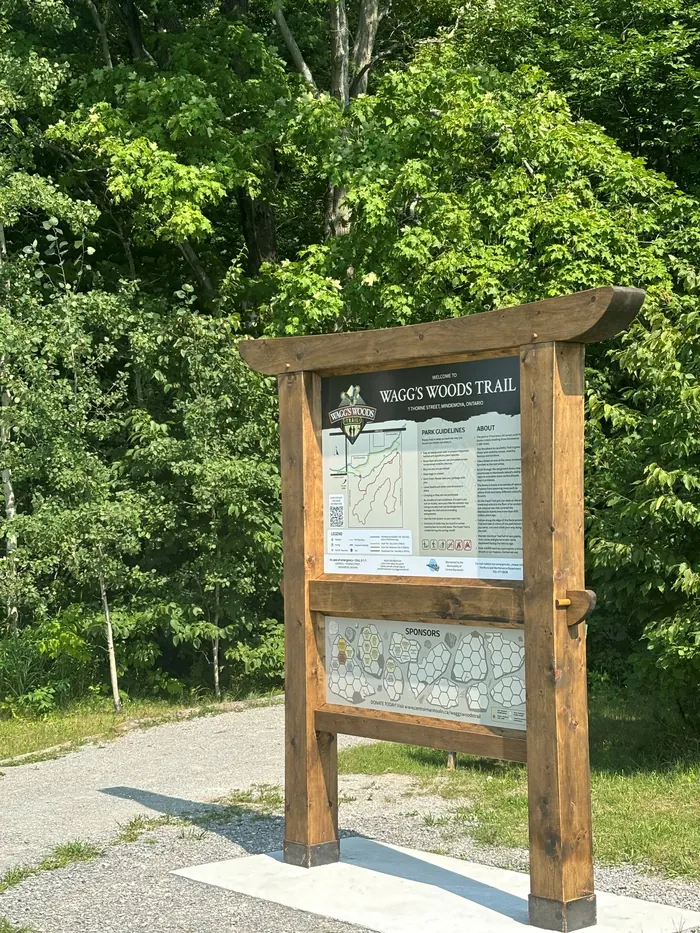
Trailhead and 10-car parking at the corner of Forest and Thorne Streets.
1 Thorne Street, Mindemoya, ON
Seasonal closures
Trail code
- No motorized vehicles, except personal mobility devices.
- No bicycles.
- Keep dogs on a leash.
- Pack out all garbage.
- Leave fossils and natural objects in place.
- No camping or fires.
- Too wet or muddy? Save your hike for another day.
- Use the trails at your own risk.
Support the trail
Trail improvements depend on donations, in-kind help and volunteers. For donation and volunteer opportunities, contact Economic Development Officer Sarah Galick.